RESEARCH PROJECT:
INTERSECTIONAL GIS MAPPING
In the the settler state of Canada, projections estimate that by 2041, one in three people will be a current or former immigrant. In addition, two in five people and one-third of the total women population will belong to racialized populations. This study focuses on Ottawa-Gatineau, two neighboring cities that mirror national demographic trends.
The maps below use Geographic Information System (GIS) to map census data to create demographic maps of Ottawa-Gatineau that looks at gender, immigration, ethnicity, and economic status. The last map highlight areas where recently arrived women immigrants (refugee and first generation), racialization and economic vulnerability intersects. In a second part of the study, these areas are addressed through participatory mapping workshops that centers the voices of people.
Case-study: Ottawa-Gatineau, Canada
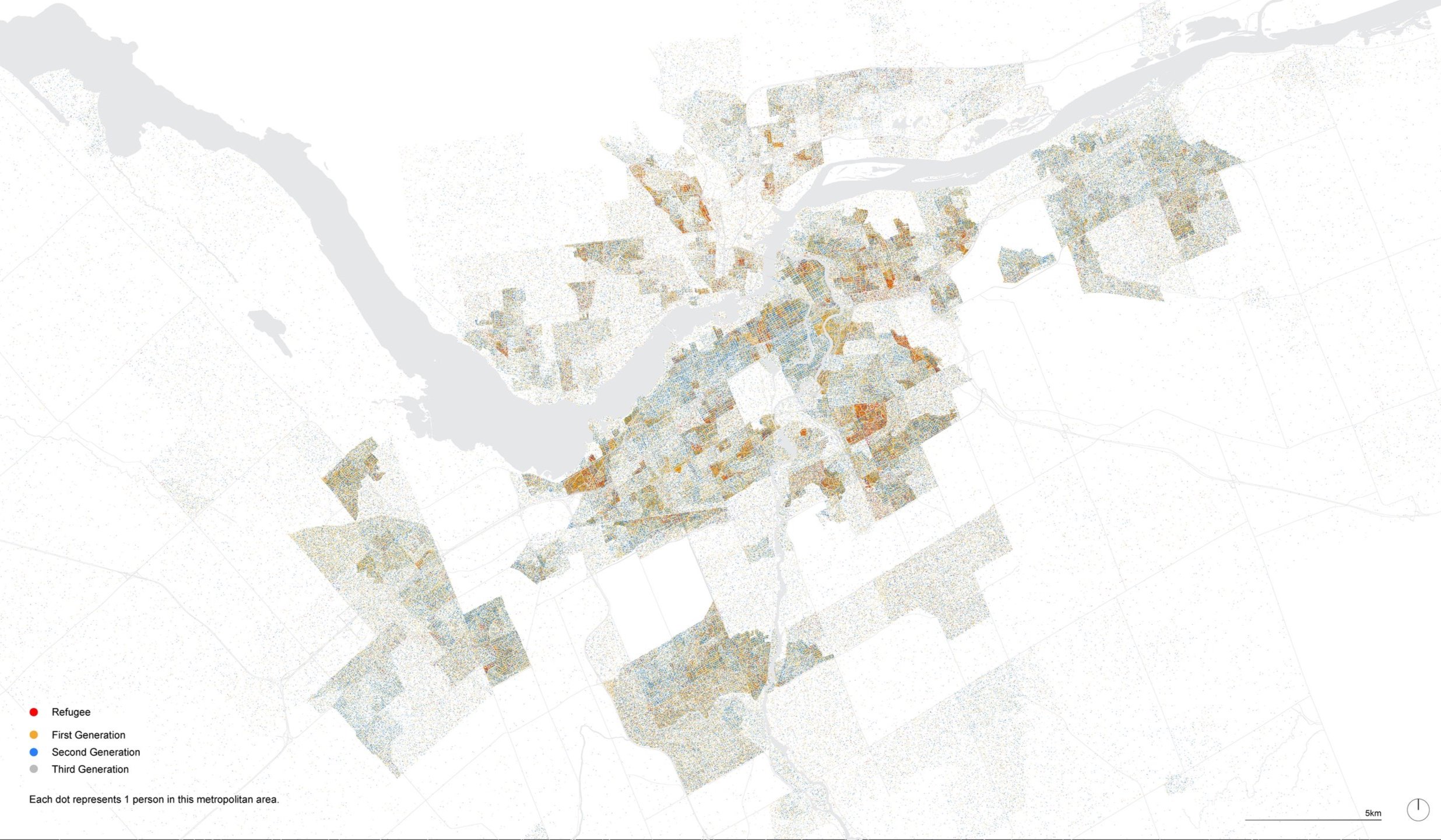
Urban distribution of Immigrant populations per generation and refugee status, Ottawa-Gatineau, Canada. (CC: All rights reserved )
Natalia Escobar Castrillon with Stefano Romagnoli (Region Austral)
Published at: Escobar, N. “Undoing White Settler Designed Cities: Mapping with Racialized Immigrant and Refugee Women in Canada,” ACSA 112th Annual Meeting: Disrupters on the Edge Proceedings, Vancouver, 2024.

Urban Distribution of racialized women, Ottawa-Gatineau, Canada. (CC: All rights reserved)
Natalia Escobar Castrillon with Stefano Romagnoli (Region Austral)
Published at: Escobar, N. “Undoing White Settler Designed Cities: Mapping with Racialized Immigrant and Refugee Women in Canada,” ACSA 112th Annual Meeting: Disrupters on the Edge Proceedings, Vancouver, 2024.
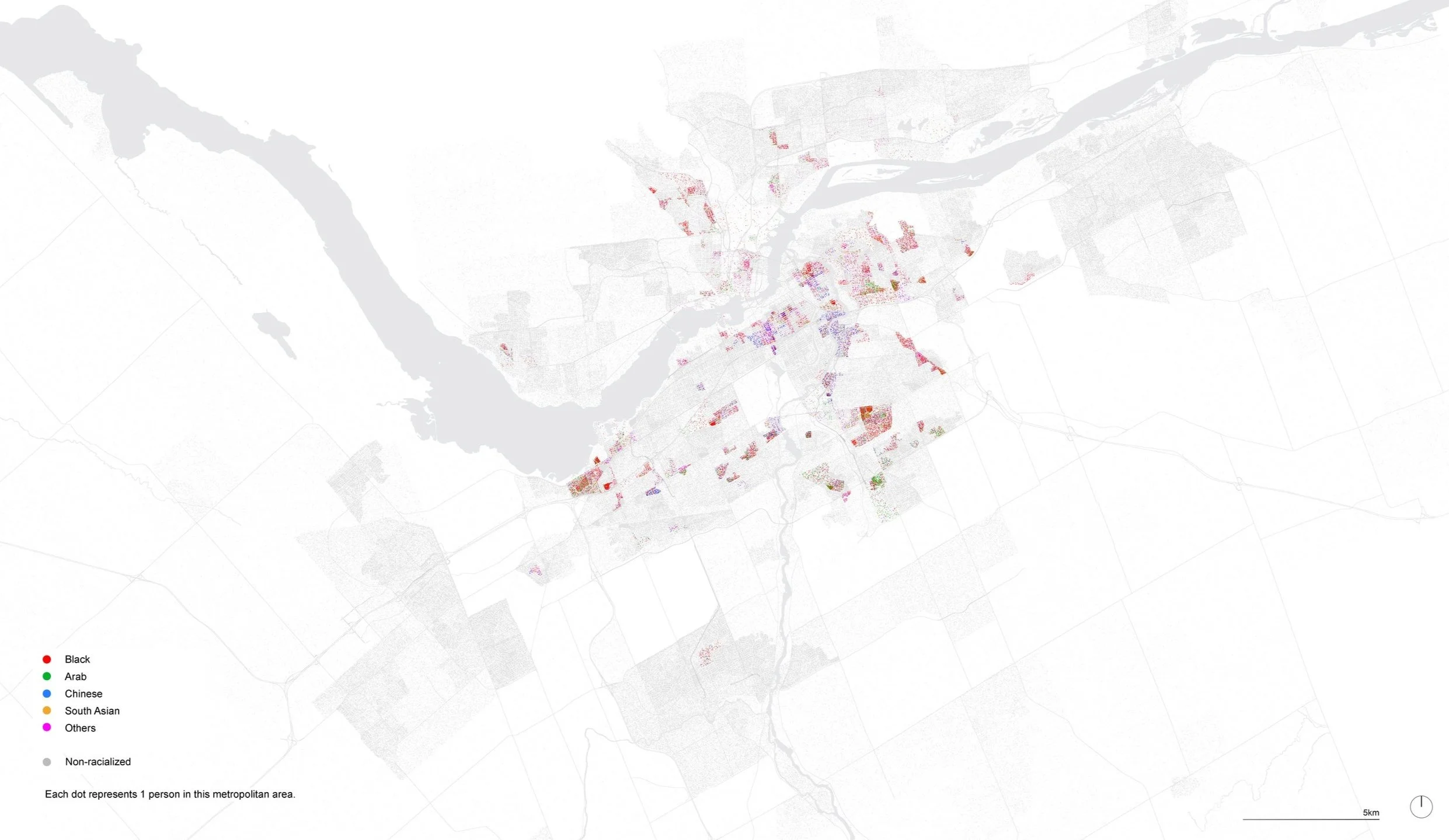
Urban Distribution of racialized women in areas of high economic insecurity (20% low-income census cut-off), Ottawa-Gatineau, Canada. (CC: All rights reserved)
Natalia Escobar Castrillon with Stefano Romagnoli (Region Austral)
Published at: Escobar, N. “Undoing White Settler Designed Cities: Mapping with Racialized Immigrant and Refugee Women in Canada,” ACSA 112th Annual Meeting: Disrupters on the Edge Proceedings, Vancouver, 2024.
Supported by Carleton University an the non-profit organization the Inter-American Development Bank